
Professor Vladimir (Ze'ev) Khanin and Ariel Kogan
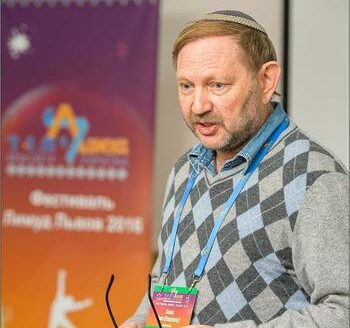 Professor Vladimir (Ze’ev) Khanin is an ISGAP Research Fellow. He lectures in Political Studies and leads the research program on Post-Soviet Conflicts at the BESA Center for Strategic Studies at Bar-Ilan University. He also serves as the Academic Chairman of the EAJC Institute for Euro-Asian Jewish Studies in Petah Tikvah.
Ariel Kogan is an independent researcher specializing in the Caucasus Region and Turkic states of the former USSR. He is currently monitoring and analysing local media sources in former Soviet Countries, Turkey and Iran.
To accuse a state of a crime it did not commit, particularly one defined with legal precision, it is first necessary to alter the definition of that crime. This is not a rhetorical device but a structural method. When the facts do not meet the legal threshold and intent cannot be proven, it is replaced with interpretation. In this way, accusation begins to shape definition rather than follow from it.
This shift typically happens incrementally rather than explicitly. Core legal elements such as intent are gradually deemphasized, while outcomes and narratives take their place. Civilian harm is treated as evidence of purpose, complex conflicts are simplified into moral binaries, and the distinction between deliberate destruction and collateral consequence is blurred. As a result, the accusation gains emotional force while the legal standard that should support it becomes increasingly elastic.
Few concepts illustrate this danger more clearly than genocide, a term coined in 1944 by Raphael Lemkin, a Polish-Jewish jurist who fled Nazi occupied Europe and lost 49 members of his family in the Holocaust. He introduced the term to describe and legally define the systematic destruction of the Jewish people by Nazi Germany, but his ambition went further. Lemkin sought to establish a new category in international law that would capture the coordinated destruction of a human group, including not only physical annihilation but also the dismantling of its cultural and social existence.
His contribution was legal and conceptual. Lemkin did not merely describe genocide; he created a legal standard for determining it. He insisted on precision and restraint. At the center of his framework was the requirement of specific intent, or dolus specialis, to destroy in whole or in part, a national, ethnic, racial or religious group, as such. The phrase “as such” was essential. It ensured that genocide would not be defined by scale alone but by purpose. Without this requirement, the concept would collapse into a broader category of violence and lose its meaning.
This is precisely the risk that has materialized in the contemporary use of the term in accusations against Israel.
A Legal Challenge to Appropriation and Distortion
On April 27, 2026, the European Jewish Association, together with Joseph Lemkin, the closest living relative of Raphael Lemkin and president of the Jewish Bar Association, submitted a comprehensive legal memorandum to the Office of the Governor of Pennsylvania and the Pennsylvania Bureau of Corporations and Charitable Organizations. The submission is not a political document. It is a detailed legal record establishing that the organization calling itself the Lemkin Institute for Genocide Prevention has, since its founding in 2021, used the Lemkin name without the knowledge, consent, or authorization of the Lemkin family. It further asserts that this conduct constitutes violations of Pennsylvania statutory law, Pennsylvania common law, and federal law, including the Lanham Act. More fundamentally, the memorandum concludes that the Institute has “systematically weaponized Raphael Lemkin’s coined term ‘genocide’ against the State of Israel” in direct contradiction to Lemkin’s documented values, his Zionist writings, and his legal definition of the term.
The legal submission is reinforced by a public press release issued the same day, which frames the dispute in stark terms: “The family of Raphael Lemkin… submitted a comprehensive legal memorandum… documenting what they describe as the unauthorized exploitation of their family name…”
Joseph Lemkin stated: “An organization in Pennsylvania is now using his name, without our permission, to accuse the Jewish state of the very crime he gave his life trying to prevent…and turned our family’s pain into a fundraising appeal.”
Rabbi Menachem Margolin the head of the European Jewish Association added: “Raphael Lemkin’s name is not a brand… The Institute has no right to weaponize a Holocaust survivor’s name against the very people he sought to protect.” These statements are not rhetorical. They reflect documented conduct, including fundraising campaigns and public messaging conducted under the Lemkin name.
The “Smoking Gun”: Manufacturing Legitimacy
Among the most legally significant findings in the submission is what it describes as the “smoking gun.”
After the Lemkin family filed its complaint and the dispute received international media attention, the Institute announced that an individual named Peter Raphael Lemkin had joined its organizational structure. This individual had no prior visible involvement with the Institute during its four years of operation and has never represented the Lemkin family.
The timing is decisive. The addition occurred only after legal proceedings had begun. In legal terms, this constitutes evidence of “consciousness of guilt”: an implicit acknowledgment that authorization was required and had been absent. Authorization cannot be created retroactively. The attempt does not cure the violation; it confirms it.
From Advocacy to Infrastructure: Enabling Antisemitic Ecosystem
Beyond legal violations, the memorandum reveals a broader and more consequential reality. The Lemkin Institute functions not merely as an advocacy organization, but as an infrastructure node within a global ecosystem of antisemitic narratives. Its documentation, reports, and public statements have become a reference base for hundreds of anti-Israel and openly antisemitic organizations worldwide, including entities linked to or funded by Qatar and Iran. These actors rely on the Institute’s materials to lend legal and moral legitimacy to accusations that Israel is committing genocide.
This is a critical transformation. The Institute converts political hostility into the language of international law. It provides a vocabulary that allows extremist narratives to present themselves as credible, scholarly, and legally grounded. In doing so, it lowers the barrier for adoption across networks that range from activist groups to state-sponsored propaganda channels. The result is amplification at scale. Accusations that could otherwise have been dismissed as ideological or conspiratorial are recast as “legal findings.” Divorced from its definitional limits, the term “genocide” becomes an instrument of mass political messaging. It is a process that allows a sort of narrative laundering, legitimizing antisemitic allegations through the co-opting of legal nomenclature and academic authority.
Convergence with Terrorist Propaganda
The Institute’s messaging has repeatedly echoed key elements of Hamas propaganda. It has characterized Israel’s actions in Gaza as genocide and framed U.S.-backed humanitarian aid as a deliberate weapon against civilians.
Although presented in the language of human rights advocacy, the Institute’s statements frequently align, both in timing and terminology, with narratives disseminated by Hamas, a designated Foreign Terrorist Organization under U.S. law. This convergence poses severe legal and security risks. The crime of offering material aid to a terrorist group, in violation of 18 U.S.C. § 2339B, includes services and other help that advance the group’s goals. The Institute’s operations might not be prosecutable on their face, but the pattern of alignment and amplification is worthy of study, especially if there are evidence of coordination, sponsorship or intent.
The October 17 Accusation: Narrative Before Evidence
The dynamic of definition-following-accusation is most clearly illustrated by the Institute’s October 17, 2023 declaration. Ten days after Hamas murdered approximately 1,200 Israelis, the deadliest massacre of Jews since the Holocaust, and before any Israeli ground operation in Gaza had begun, the Institute accused Israel of genocide.
As the document emphasizes: “The Institute’s October 17, 2023 declaration accusing Israel of genocide — issued ten days after the Hamas massacre… before the dead had been buried.”
This was not a legal determination. It was not the result of investigation. It was a political statement issued at a moment of maximum vulnerability, using the authority of a name the organization had no right to use.
The ICJ and the Absence of Intent
Subsequent legal developments confirm the absence of the central element required by Lemkin’s definition: specific intent. On January 26, 2024, the International Court of Justice, in South Africa v. Israel, declined to order a ceasefire. Such an order would be the standard remedy if genocide were established or even strongly indicated. Courts do not withhold such measures where evidence of genocidal intent is present. The
absence of such a finding reflects precisely what Lemkin insisted upon: without demonstrable intent to destroy a group as such, the legal threshold for genocide is not met.
The Voice of Scholarship
The scholarly response to the Institute’s claims has been decisive. One hundred and twelve internationally recognized Holocaust and genocide scholars, from institutions including Harvard University, Dartmouth College, the United States Holocaust Memorial Museum, Brandeis University, McGill University, Tel Aviv University, and Bar-Ilan University, have submitted a formal letter supporting the Lemkin family.
They state: “Israel’s counter-terror campaign in Gaza is not genocidal, either in intentions or actions… The fact the Lemkin Institute began accusing Israel of ‘genocide’ on October 17, 2023… further illustrates the absurdity of the accusation… We support your efforts to reclaim the legacy of Raphael Lemkin from those who are besmirching his ideals and goals.”
This is not a marginal view. It reflects a broad consensus across the field.
Political Amplification and International Legitimization
The Institute’s influence extends into international political discourse. Former United Nations (UN) Special Rapporteur Francesca Albanese has repeatedly relied on the Institute’s perceived credibility to reinforce her own bogus claims, amplifying its assertions to global audiences. This demonstrates how the Institute operates not only as a producer of content but as a legitimizing authority within a network of amplification.
This pattern has not gone unchallenged. Marco Rubio publicly criticized Albanese, accusing her of “spewing unabashed antisemitism, expressing support for terrorism, and showing open contempt for the United States, Israel, and the West.”
Such statements reflect growing concern that what is presented as human rights advocacy may, in practice, contribute to the normalization of extremist narratives.
The Erosion of Meaning
At its core, this is not only a legal dispute. It is a conceptual crisis. When the definition of genocide is altered, the concept itself is weakened. It loses the precision that gives it legal force and moral clarity. It becomes a tool that can be deployed without meeting its own criteria.
Raphael Lemkin understood this danger. That is why he insisted on a definition that was narrow, demanding, and precise. The current effort by the Lemkin family and the European Jewish Association is therefore not only a legal challenge. It is a defense of that precision. It is an attempt to prevent the transformation of genocide from a clearly defined legal crime into a flexible instrument of political accusation.
If the definition can be altered to fit the accusation, then the accusation no longer requires proof. And when that happens, the concept itself begins to collapse.
To submit an article to ISGAP Flashpoint, paste it into the email body (no attachments). Include a headline, byline (author/s name), and a short bio (max. 250 words) at the end. Attach a high-quality headshot. Send submissions to [email protected].