This course examines how contemporary antisemitism in Western societies has been reinforced and reshaped by its Arab-Islamist iteration, particularly through the activism of Arab radical and political Islamist immigrants who employ antisemitic narratives to challenge and erode the foundations of Western liberal democracy.
The course will analyze how political Islamists in the West deliberately adapted antisemitic narratives derived from twentieth-century pan-Islamist and pan-Arabist ideologies in order to claim moral authority and exert influence on decision-making processes in their host countries. The long-standing Islamist project of delegitimizing Israel and legitimizing all forms of “violent resistance” against Jews in the Middle East has been echoed in Western contexts through the rhetoric of the recent “Free Palestine” movement. This has increasingly translated into hostility against Jewish communities worldwide, while simultaneously intersecting with broader ideological currents that glorify anarchism as a means for social justice, and demonize the political and cultural institutions of Western democracies as alleged symbols of imperialism and colonialism.
The global reactions to the October 7, 2023 attacks in Israel and Israel’s subsequent war with Hamas in Gaza provide a critical case study of this dynamic. In their aftermath, antisemitic discourse rooted in Arab and Islamist contexts circulated with remarkable speed across Western campuses, media platforms, and activist movements. This not only normalized hostility toward Jewish communities worldwide but also reframed public debate about the Israel–Palestinian conflict and around the political correctness of the political architecture of Western states. By situating contemporary antisemitism at the intersection of Arab political identity, radical Islamism, and modern Western political struggles, the course provides students with both historical depth and analytical tools. By its conclusion, participants will be able to trace the intellectual genealogies of Arab antisemitism, evaluate its global diffusion, and critically assess its implications for Middle East politics, Western societies, and the persistence of radicalization in democratic settings.
Session 1: Theological and Ideological Roots of Arab-Islamist Antisemitism
This lecture examines the centrality of the “Palestinian Cause” in modern Arab and Muslim societies by introducing the Three-Layer Theory of the Israel–Palestinian conflict. The theory explains how antisemitism became embedded within the ideological frameworks of political Islamism and Arab nationalism during the mid-20th century. Students will be introduced to the historical and intellectual foundations of antisemitism in Arab and Islamic contexts, with particular attention to how religious, nationalist, and Islamist narratives accumulated over time. Together, these layers transformed the conflict from a localized territorial dispute into a global ideological struggle. The framework will provide the foundation for the course’s broader exploration of antisemitism as both a regional phenomenon and a transnational challenge.
Session 2: Political Islamism and the Weaponization of Antisemitism
This session examines how political Islamist movements in the late twentieth century, chief among them the Muslim Brotherhood in Egypt, had transformed the Arab nationalist doctrine of the “Palestinian Cause” into an “Islamic” struggle. By reframing anti-Zionism and antisemitism as components of a broader cosmic conflict between Muslims and Jews, Islamists extended the reach of the Arab–Israeli conflict beyond the Middle East and gave it universal resonance. Students will learn how the Muslim Brotherhood, Hamas, and related Islamist groups embedded antisemitic motifs into their founding documents, political and religious rhetoric, and social mobilization strategies. Through a close reading of key Islamist texts alongside critical scholarship, this session traces the shift of antisemitism from a marginal trope to a central pillar of Islamist ideology. It highlights how Islamists fused classical religious motifs, Arab nationalist narratives, and imported modern antisemitic myths to consolidate political legitimacy and expand their global impact.
Session 3: The Palestinization of the West: Globalizing Arab-Islamist Antisemitism
This session examines how antisemitic narratives rooted in Arab nationalism and political Islam migrated into Western societies through Islamist diaspora networks, international media, and transnational activism. Students will analyze how the “Palestinian Cause” was transformed from a regional political struggle into a global moral framework, systematically invoked to legitimize hostility toward Jews and Israel in Western contexts. Drawing on both primary sources and critical scholarship, the session highlights how Islamist ideologues, such as Yusuf al-Qaradawi, universalized “Palestine” as the central religious cause for all Muslims, while sympathetic Western intellectuals rearticulated these narratives in academic and activist circles. Particular attention will be given to how organizations like the Muslim Brotherhood adapted their discourse in Europe and North America to align with progressive idioms of anti-colonialism, resistance, and social justice, thereby normalizing antisemitism under the guise of political critique and human rights advocacy.
Session 4: October 7 and Beyond: The Normalization of Antisemitism in the West
This session applies the historical and theoretical frameworks developed in earlier lectures to the aftermath of the October 7, 2023 Hamas attacks in Israel and the subsequent war in Gaza. It explores how Arab-Islamist antisemitic narratives rapidly circulated across Western media, campuses, and protest movements, reframing the massacre as a form of legitimate “resistance” and translating hostility toward Israel into hostility toward Jewish communities worldwide. Students will analyze how the language of decolonization, social justice, and anti-imperialism has been mobilized to mask and mainstream antisemitism in liberal democratic contexts. By examining case studies from universities, social movements, and international organizations, the session highlights how the legacy of Islamist and Arab nationalist discourses converged with Western progressive rhetoric, producing a climate in which antisemitism is increasingly normalized and even valorized. The session concludes by considering the broader implications for democratic resilience, intercommunal relations, and the persistence of radicalization in Western political culture.
Spring 2026
Online
4
January 21 (Wednesday), January 26, February 2, February 9 2026
Mondays, 11:00AM - 12:00PM
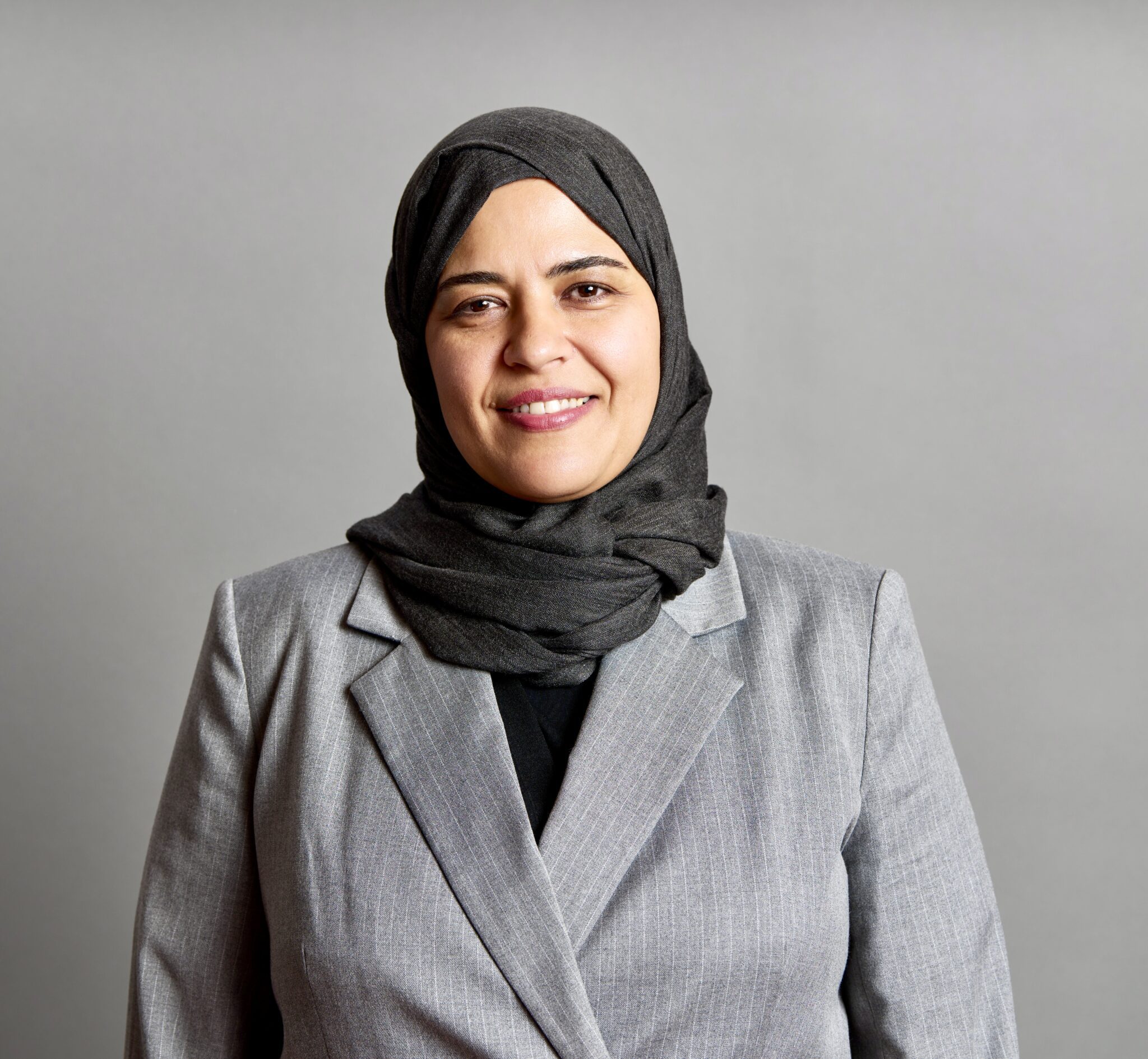 Dalia Ziada is the Washington, D.C. Coordinator and Research Fellow at the Institute for the Study of Global Antisemitism and Policy (ISGAP). An Egyptian political analyst based in the United States and an award-winning writer, she specializes in Middle East politics, radical Islamism, and Arab- Israeli relations. She has over twenty years of experience leading research and civil society 7 initiatives across the Middle East and North Africa, including directing the Ibn Khaldun Center for Development Studies, the Liberal Democracy Institute, and the regional office of the American Islamic Congress. Ziada is the author of “The Curious Case of the Three-Legged Wolf: Egypt— Military, Islamism, and Liberal Democracy” (2019), and she is currently working on her new book, “The Coalition of Odds,” a study of post–October 7 Middle East geopolitics. Her work has been widely published, and she frequently speaks at universities and policy forums in the United States and internationally.
